Posts

Poverty Impedes cognitive function

It is well documented that poor people have poor well-being. Children who experience poverty have lower rates of school completion and lower cognitive ability than others. While some theories claim that the lower cognitive ability of the poor is due to lower levels of formal education, others believe that the characteristics of the poor people are at play. A study by Mani, Mullainathan, Shafir and Zhao (2012) takes a different approach and suggest that a sense of scarcity of money leaves the poor with fewer cognitive resources to guide their action. In a lab experiment, they found that when people with lower incomes were induced to think about their daily financial troubles, they performed much worse on subsequent tasks measuring cognitive ability, than those who were not induced to think about financial troubles. For people with higher incomes, however, inducing thoughts of financial scarcity had no effect. While the lab study is fascinating, a quasi-experimenta...

Repair or Replace?

Image
In the Movie Passengers, two passengers on a spaceship, heading to a new planet are in a discussion. The girl asks the guy why he gave up his life on Earth to begin a new life on a new planet. The man replies that he is a mechanic and that on Earth, if anything breaks, people replace it rather than repair it. A life on a new planet would allow him to use his skills to repair things. Indeed, people are increasingly choosing to replace rather than repair. For several products, it is easier and cheaper to replace it than to repair it. While this is true for items ranging from clothes to smartphones, it is still not true for items like cars. Given the high Divorce rates, I'm guessing replacing your spouse is also increasingly becoming a preferred choice. Apparently, in the future, they would be able to replace entire organs with an artificial organ printed using a 3D printer. The first negative consequence of this trend is a falling demand for careers that involve repairs....

Why are people often late?

Some Indians think that Indians are often late and traffic is usually the  excuse. A G reek  friend of mine says Greek people are known for their tardiness and an unexpected visit from a relative is often the excuse. I find it hard to believe this one but my Russian friend says that Russians are often late because it is bullshit to be early. These are narratives from people who base their opinion based on personal experience, the validity of which cannot be guaranteed. However, there are more rigorous studies that indeed find cross-cultural differences in punctuality.      " Participacion   Ciudadana ", the civic group behind a campaign in Ecuador, reckons that lateness costs Ecuador $724m (or 4.3% of GDP) each year (Cabral & Pacheco-de-Almeida , 2006).  Given the importance of punctuality in every aspect of life, it is important to look at the factors affecting  punctuality and to identify situations that are conducive to punctual ...

The Return Trip Effect: Why the Return Trip Often Seems Shorter

Image
This article needs no motivation. The Return Trip Effect, which is the perception that the return trip seems shorter than the initial trip, even though the distance traveled and time spent traveling are identical, is observed by almost everyone I know.  I couldn't explain how this was possible until I recently came across a paper by Van de ven, Van Rijswijk, and Roy (2011), that we shall call VVR henceforth.  The first possible reason for the return trip effect could be that the initial trip deals with an unfamiliar and unpredictable route, whereas the return trip is relatively more familiar and predictable. Research has shown that unfamiliar or unpredictable tasks are often remembered to be longer than familiar or predictable ones. The second reason is motivated by research that suggests that people often underestimate the time required for tasks. If this is the case, then people are likely to underestimate the time of their initial tri...

Why is the library cold?

For the most part of my time in the library, I need to wear a sweater. If I'm in the library for too long, then I sometimes have to wear a jacket above the sweater. I began thinking about why the library is so cold. Another way to think of this is as follows: given that the library is cold, why hasn't it gotten warmer. One reason for this could be, what researchers have christened, "Diffusion of responsibility". In a nutshell, it says that nobody takes responsibility ( telling the librarian that it is too cold) because they think someone else would do it. In the next few lines, you can read the process that goes on in my head and my conversation with a few others. Me to Myself: The library is too cold. Maybe it's just today. Me to Myself: The library is still cold. Maybe I feel cold because I am from the India. Me to Sophie: The library is too cold. Sophie: Yeah even I feel cold. I think a lower temperature is conducive to studying and so they deli...

Buyer confusion and Prices

Economic theory suggests that more choice is better. Indeed, companies around the world have been offering more variety in their product and services, in order to cater to different individuals with different preferences. People can choose a smartphone based on 30 different attributes, with each of these 30 attributes having subclassifications.  Barry Schwartz in his book "The Paradox of choice" presents a list of products that he came across in the market in the US. He says that there are 285 varieties of cookies, 230 soup offerings, 175 salad dressings, 275 varieties of cereal, 75 varieties of iced teas, 15 flavors of bottled water in the food section. In the pharmaceutical section, he found 61 varieties of suntan and sunblock, 80 different pain relievers, 40 options for toothpaste, 116 types of skin cream. In the electronics section, he found 6,512,000 possibilities of different stereo systems, 110 different televisions, and 85 different telephones excluding cel...

Do cheaters in the lab cheat in the field as well?

Image
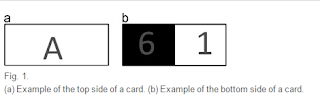
One of the biggest criticisms that psychologists and behavior economists face is about external validity. External validity is a term used to describe the generalizability of experimental results conducted in the lab, to the real world setting.  There are several studies that look at the extent that people cheat in the laboratory (see  Rosenbaum et al., 2014 )  but we can only conjecture that people who cheat in the lab, cheat outside as well. We can never know for sure. One could argue that participants don't think it is bad to cheat in the lab as it doesn't completely resemble a real life situation.  Potters and Stoop (2016) , in a well-designed study, show that cheaters in the lab cheat in the real world as well. This is an important finding because now studies about cheating in the laboratory can use this evidence to justify external validity. They conduct a variant of the Mind game as in  Jiang (2013) . There are twenty cards with the to...